
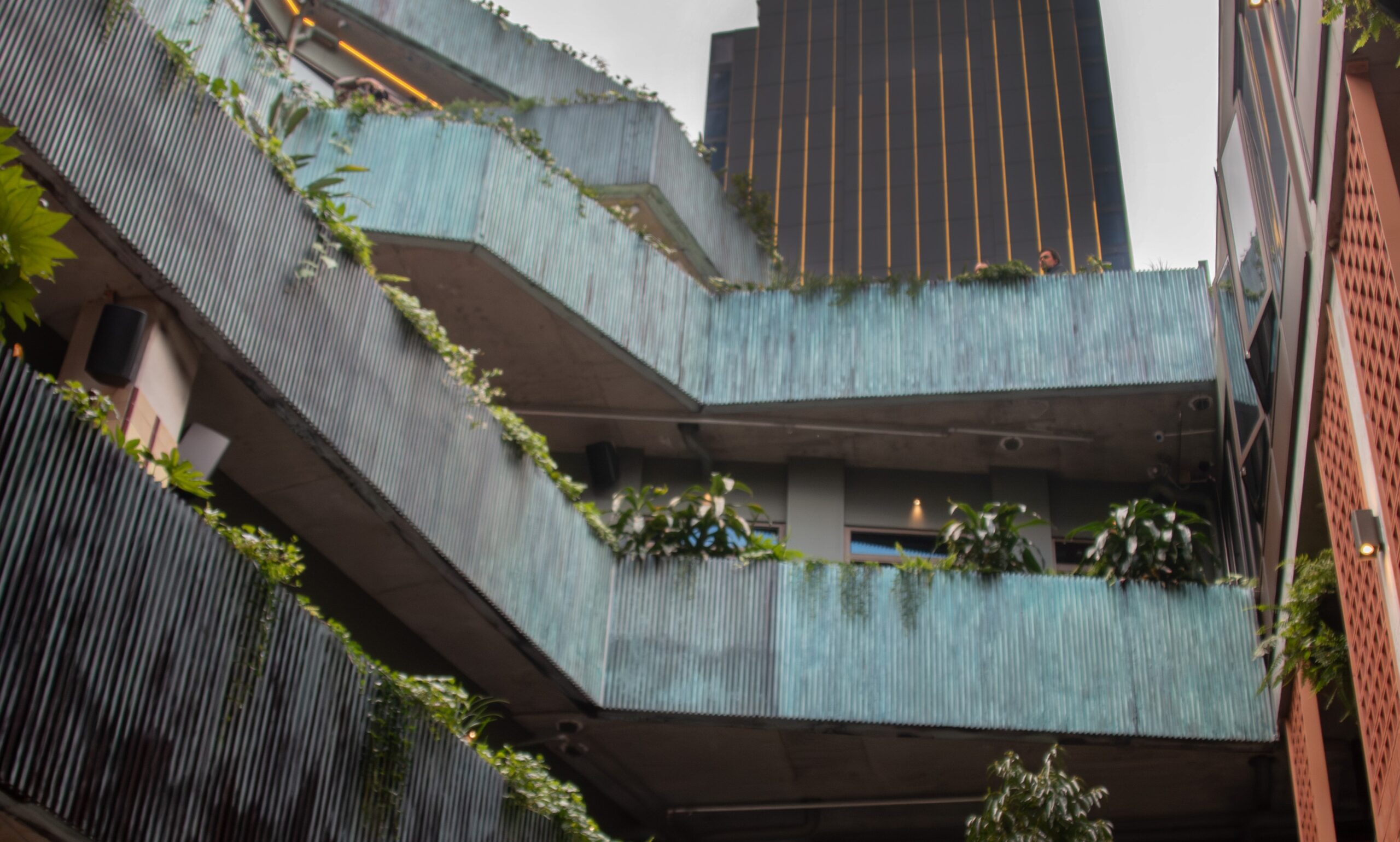
When Sand Hill Road bought the Waterside Hotel eight years ago, it wasn’t a punt, it was a statement of belief.
“We bought it because we love this scale of pub,” says Matt Mullins, Company Director of Sand Hill Road. “That thousand-person patron number is the sweet spot for us. We’d spent twenty years in smaller suburban pubs, and this felt like the next natural step.”
The site, a 170-year-old double-storey landmark on the corner of King and Flinders Streets, had seen better days. But Matt and his partners saw something more. “This pocket of the city had been very difficult, very challenging,” he says. “But we were confident that would change.
We’ve been at the vanguard of the moments where a few other places have seen change and real urban renewal very quickly. All the fundamentals tell us that it will evolve and improve as it becomes the new Midtown rather than the bottom end of the city.”
Investing when others hesitate is a familiar story across Victoria’s pub sector. It speaks to confidence in Melbourne’s hospitality heartbeat, even as the cost of capital, construction delays, and shifting regulations test every assumption along the way.

From Modest Renovation to Ambitious Reinvention
The Waterside was initially a straightforward renewal. “We came up with a modest scheme that left the original building largely intact,” Matt says. “Floors, walls, ceilings stayed where they were. We’d fit out the entire building with abrand-new interior, but we weren’t adding square metreage or improving back-of-house efficiency.”
They had stripped the building back to its bones when the pandemic hit. The project stopped overnight. “There was just enough support in the system to enable us to hold our assets, he recalls. “We went through every ounce of savings to survive and to hold everything. We borrowed more. But we made it through, and eventually, we could trade again.” When work resumed, the team paused to ask a hard question: could the design be better? “One of our partners, Andrew, was sitting at the back of the office. He said, before we fire it up again, let’s make sure this is still right. Could we make it more efficient, more profitable?” Matt laughs. “The answer was: well, fuck yes, we could.”
That afternoon, sketches turned into concepts, and by 3 am, a cardboard model sat on the kitchen table. It was a vision of what the Waterside could become. “The building we built is pretty much identical to that model,” he says. “A big, lush, green, richly layered, textured, modern pub.”

The Reality of Big Builds
Then came the reality. “The cost to deliver this, and every other project in Australia, went through the roof. It didn’t matter what it was, it just cost more.”
The biggest challenge, however, wasn’t money. It was planning. “It should have been streamlined. In theory, it was streamlined,” he says. “We had the Lord Mayor and Deputy Lord Mayor onboard from the very beginning, very excited, very focused. There were no objections, no controversy, no changes to patron numbers or hours. But the process still took a year longer than it should have because the wheels of government just moved so slowly.”
Midway through construction, two external rule changes hit simultaneously: Melbourne Water’s updated flood-level mapping, and new in-ground heritage protections. Both arrived after work had begun and added a year, a million dollars, and enormous strain. “It was debilitating. It was almost enough to knock the project over,” Matt admits.
The experience crystallised a view. “As a company, we’ve come to an informal conclusion that we will never again seek to do major development work in the CBD. Not anything
in-ground anyway. Digging into the ground means heritage rules, flood-level problems, and unionised-site thresholds that add time and cost you simply wouldn’t believe.”
Confidence in Victoria’s Future
Despite those challenges, Sand Hill Road doubled down. The finished Waterside is one of Melbourne’s largest and most ambitious pub redevelopments ever. For Matt, it’s proof of confidence in Victoria’s hospitality future.
“We think there are multiple speeds in the current environment,” he says. “That’s been the feature of our economy since COVID. We have great confidence in Melbourne’s hospitality scene, notwithstanding the very real challenges of crime, homelessness, and patchy consumer confidence. The fundamentals are solid for pubs, bars and restaurants in the CBD. We wouldn’t have made this investment if we didn’t believe that.”
When confidence exists, investment follows. But that confidence must be matched by a regulatory system that rewards risk-taking rather than punishing it.
Lessons for the Next Generation of Builders
Asked what advice he’d offer other operators contemplating a large-scale redevelopment, Matt doesn’t hesitate.
“No matter how realistic we thought we were at the start, about escalating costs, rising interest rates, and new regulatory hurdles, we were wrong. We massively underestimated each.
Build more contingency into everything. More money. More time. Hopefully we go back to a pre-COVID era where these impositions are normalised. But if we don’t, you’re going to need all that contingency.”
And the second lesson? Avoid digging where possible. “Going into the ground in Melbourne’s CBD is wildly, prohibitively difficult. Crossing the threshold into a unionised site adds time and cost that you simply wouldn’t believe. Avoid it if at all possible.”
Yet, for all the pain, Sand Hill Road’s creative philosophy remains undimmed. “At Sand Hill Road we always start with the story. Our pubs are about storytelling. We hope patrons can experience things they can’t find anywhere else; to be transported to a different time perhaps, or a different place. Or maybe just a different version of a night out. We want them to experience exceptional food, drinks and service, but beyond that, to feel they’ve been taken on a journey that feels new and exciting.”
That sense of narrative, of layering design, service, and space into a cohesive whole, defines the Waterside. It’s a project born of belief: in Melbourne, in its people, and in the enduring role of the pub as both anchor and catalyst in a changing city.

